![]() |
|||||||||
|
|||||||||
The Hemenway Hallmark
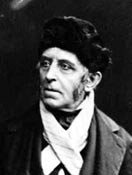
Augustus Hemenway's death in 1876 marked an important end and a significant beginning in the history of Boston; a city with citizenry who, even by that date, had become quite accustomed to historic milestones. Hemenway's death signaled the end of an era for "merchant princes." He was among the last of the greats in a long line of late eighteenth-century innovators who had seized upon the geographic advantage of their location and created a shipping trade between Boston and the rest of the world never again equaled in American maritime history. So successful were these ventures that men like Hemenway, who had to overcome his tenuous beginnings, could realize considerable wealth and social prestige early in adult life. In Boston of his day, these accomplishments entitled him to an unquestioned place among that well-documented tradition of nineteenth-century Brahmins; the members of the elite, familial dynasties of Beacon Hill. Hemenway's fortune was already secure when he met and, in 1840, married Mary Tileston, the daughter of a wealthy New york businessman. Yet, while he was able to encourage his wife, and eventually their children, to enjoy the luxuries which his labors had produced, he was personally driven by a puritanical over zealousness for work. This unfortunate compulsion resulted in a nervous break-down which lasted over twelve years and despite a short rally, eventually led to his death. He died on his sugar plantation in Cuba leaving his widow and their children financially secure in Boston. But if the acquisition of a great fortune had been the benchmark sought by Augustus Hemenway, Sr., the philanthropic use of that great fortune became the Hemenway family hallmark, primarily because of his wife and only son. Of particular note in this study is that a large part of that philanthropy was directed toward the encouragement of physical education in Massachusett's public and private schools and in four of her colleges. In the first decade following his father's death, Augustus Hemenway, Jr. financed the construction of gymnasiums at Harvard University (1878) and Groton School (1884). The Harvard Gymnasium quickly became the prototype for excellence in college gymnasium construction throughout the United States and, under the directorship of Dudley Allen Sargent, the University's physical education program grew to almost unrivaled prominance in the country. In the next decade, Mrs. Augustus Hemenway, Sr. (Mary Hemenway) financially ensured the teaching of Swedish gymnastics in the Boston Public Schools through two in-service programs led by Baron Nils Posse (1888), underwrote the famous Boston Conference of 1889, and in that same year, funded the start of the Boston Normal School of Gymnastics (BNSG). Moreover, her educational philanthropies did not cease with her death in 1894. By placing her property in trust for fifteen years, she was able to aid in the successful transfer and merger of BNSG with Wellesley College's department of hygiene and physical education under the directorship of Amy Morris Homans, her former secretary. This same trust partially assured the construction of a handsome, new gymnasium (1909) on the Wellesley College campus which continues to serve the students today. Finally, in the twenty-first year after the death of Augustus Hemenway, Sr., his only daughter-in-law, Harriet Lawrence Hemenway, donated the necessary monies to finance the construction of yet another gymnasium. This one, on the Radcliffe College campus (1898), served as an architectural model for the group of buildings which followed it and today graces the center of that Cambridge Campus. Thus, in a span of just over two decades, the Hemenway family donated four gymnasiums and financed physical education programs in three different educational arenas. Unfortunately, only partial credit has been given to the
Hemenway's for their generosity to American physical education to date.
No doubt part of this failure has been due to the Hemenway style of
giving; it was always done efficiently and quietly, never for public
acclaim. Nevertheless, when one recalls the accomplishments of Dudley
Sargent at Harvard University, Amy Morris Homans at the Boston Normal
School of Gymnastics, and later at Wellesley College, and the
enthusiastic endorsement of physical education at Radcliffe College and
Groton School under the presidencies of Elizabeth Agassiz and Endicott
Peabody, one cannot ignore the Hemenway family role. Nor can we ignore
the extent of their contribution when we recount the thousands of
Boston school children who have received physical education instruction
since 1888 and the national impact on the growth of physical education
because of the Boston Conference of 1889. Throughout these
recollections it becomes increasingly clear that Hemenway family
support played a crucial role in the success of an educational movement
which, at that moment in history, sorely needed their patronage. CHRIS KENT, Henry Ford Community CollegeSOME BEING
A COLLECTION OF SKETCHES OF COPYRIGHT
1918 AUGUSTUS
HEMENWAY & CO.
One
of
the
most influential merchants of
Boston.
He
was
chiefly
interested in the Valparaiso, Chile trade. Augustus
Hemenway was one of the most influential
merchants of Boston. He was born in Salem in 1805, and like many boys
of that
period he was obliged to go to work when he was very young. His first
position
was as clerk in a small dry-goods store in Charlestown, and later
he was
employed by Benjamin Bangs & Co., going out as supercargo in their
vessels.
When he was fifteen years old, it is recorded, he was earning $60 a
year and
his board. With the Bangs firm he began trading for himself in a small
way with
the seacoast towns in Maine, then he branched out to the West Indies,
and by
1836 he was in business for himself under the firm name of A.
Hemenway &
Co. He owned eight large ships, which he built for his own business,
under his
own orders, and which plied to and from Valparaiso, where he had
his own
warehouse and stores. The names of these vessels were "City of
Valparaiso," "City of Santiago," "Independence,"
"Magellan," "San Carlos," "Prospero,"
"Sunbeam," and "Quintero." He also owned the entire cargoes
which consisted of whatever American products he considered would
be salable
on the west coast of South America, -- soap, candles, kerosene, refined
sugar,
boots, shoes, etc.; lathes, shovels, picks, and other tools and
machines,
woollen and cotton cloth; sewing-machines, organs, pianos, furniture,
and other
manufactures. For the homeward voyages the ships were loaded with
copper ore,
nitrate of soda, wool, hides, goatskins, etc. As all the cargo belonged
to him,
he never had to advertise for freight. One
of his captains said that when his crew was taken on
board in Boston, one of them was very drunk and noisy, whereupon the
mate told
him to stop his noise and go below. The man made some insulting reply,
whereupon the mate seized a belaying pin, struck him a heavy blow on
the head
which brought the blood over his face, and knocked him senseless to the
deck. a
lady passenger, who saw it, was horrified at the sight, and hastened to
the
cabin. a few days later, when the ship had sailed, this lady came on
deck and
observing the man who had been belabored, at the wheel, steering
the ship,
exclaimed, "Oh, my good man, how is your head?" The man glanced at
the compass and replied absent-mindedly to the puzzled lady,
"East-north-east-half-east, Madam." Another
captain brought home from Valparaiso a French shipmaster
whose vessel had been sold. He had with his baggage a quantity of fine
French
brandy. On the last day of the discharge of
the cargo the Frenchman invited the custom-house
officer on hoard to take a glass of this brandy, which the officer said
was the
finest he had ever tasted. The Frenchman asked if he would consider it
a good
thing to have in the house, and asked for a memorandum of his
residence. Soon
after that a man came from the cabin with a half-dozen bottles in a
basket and
started for the shore. Of course, the officer could not see goods taken
ashore
until the duty was paid, so he looked the other way. When he went home
that
night he was surprised and disappointed at not finding the brandy there
and discovered
a few days later that the address given to the man with the basket was
that of
one of the Frenchman's friends, and not his own address. The
custom-house
official could not say anything about the incident without showing his
neglect
of duty in allowing the brandy to be landed. Mr.
Hemenway's quiet manner of managing his affairs was
appreciated by every one. One day the stevedores' engine, at work
on the
wharf, threw off a mass of soot which was blown into the office
windows,
covering the desks and papers. Mr. Hemenway spoke to the wharfinger
about it,
who must have been a punster, for he replied, "I am very sorry; we are
always trying to suit you," and then proceeded with his work. Besides
his Valparaiso business Augustus Hemenway owned an
entire township in Maine, where he procured pine-trees, floating the
logs down
to his own saw-mill at Machias. Here they were cut into boards and
loaded on
his schooners for Cuba, where he owned a large plantation and
sugar-mill, in
which he took a great interest. One winter evening, while on his way
from Sagua
to the St. George estate, Mr. Hemenway was captured by insurgents and
held for
ransom. The manager of the estate, who was with him, was very much
terrified,
but Mr. Hemenway showed no fear whatever and passed a good part of the
night
sitting on a log, smoking cigars, and endeavoring to beat down the
exorbitant
demands made for his ransom, in which he was largely successful. At
daybreak he
sent his manager, Mr. Bartlett, to the bank, in Sagua, for the
necessary funds,
paid his ransom, then went quietly on his way. Absolute fearlessness
was one of
his strongest characteristics. After this adventure, however, he
made it a
point to go by train from Sagua to the estate. Mr.
Hemenway was an industrious, quiet, and unassuming
gentleman, and was a most successful merchant. He was so
conscientious about
his business that he was seldom willing to leave details to others.
sometimes
even superintending the loading of his vessels. He married Mary
Tileston, the
daughter of Thomas Tileston of New York, who was one of the foremost
merchants
of that city From 1820 until his death in the late sixties. There
was another Hemenway in the family who was a noted
captain, and it was said of him that he was such a good pilot that he
could
"take a ship to the White Mountains, gather a freight of cool air and
return on time with his eyes shut." |
|||||||||
![]() |
|||||||||
|
|
|||||||||