|
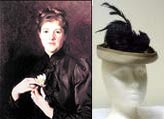 In the late 1800's having a stuffed
bird on your hat was fashionable for ladies of high society. Birds such
as Arctic terns, egrets, and owls decorated hats. In the late 1800's having a stuffed
bird on your hat was fashionable for ladies of high society. Birds such
as Arctic terns, egrets, and owls decorated hats.
Harriet Hemenway was offended by this practice and worked with her
cousin Minna Hall to found the first Audubon Society that actually had
an impact on protecting birds and wildlife.
Harriet enlisted the help of her husband Augustus to work in the
legislature . Laws were passed to prevent killing and using birds for
decoration. Some of these laws are still in effect today.
Audubon, at 100, is still helping birds
By Robin Estrin, Associated Press writer
BOSTON -- The year was 1896, and fashionable women strutted
around wearing ornate hats festooned with feathers. The more plumes,
the better.
Harriet Lawrence Hemenway, a prominent Boston Brahmin and plumed
hat-wearer herself, happened upon an article detailing the devastation
feather hunters inflicted: heaps of skinned, dead birds left to rot and
orphaned baby birds left alive to starve in their nests.
Mrs. Hemenway was horrified. She decided it was time to end
the fashion statement that was killing up to 5 million American birds a
year. Thus was born the Massachusetts Audubon Society, named in honor
of the bird painter John James Audubon.
The group, the nation's first Audubon Society, turns 100 this month.
Celebrations include a birthday party at the Statehouse on Thursday
featuring a live peregrine falcon show.
The organization that began in the parlor of an outraged society lady
now boasts 55,000 Massachusetts members, an annual operating budget of
$1O million and a $65 million endowment.
With 24,000 acres at 18 staffed nature centers across
Massachusetts, the society is the largest private conservation group in
New England and is poised to grow even larger, said president Jerry
Bertrand.
Expansion plans include a $6 million nature center on 63 acres at the
former Boston State Hospital in Mattapan, slated for completion by
1998. And in Newburyport, 3.5 waterside acres that once included a
restaurant will be converted into a bird-watching observation center by
late next year.
At the Ipswich River Wildlife Sanctuary, the society's largest, 3 miles
of river weave through 2,800 acres of meadow, swamp, ponds and islands.
Hikers at the Moose Hill Wildlife Sanctuary in Sharon can spot deer,
porcupine and wild turkeys roaming on the 1,435-acre site.
Mrs. Hemenway would be proud. Some of the plume birds facing
extinction at the turn of the century are back in force, including the
snowy egret.
By the 1920s, a combination of societal pressures and new laws made
feathered hats a fashion faux pas. The Audubon Society, meanwhile, was
gaining ground around the country. By the turn of the century, several
states had their own Audubon groups, and in 1905, a national umbrella
group was launched.
Today, the Massachusetts Audubon Society is one of 11 loosely
linked state Audubon societies in the country. The state groups are
independent of the National Audubon Society, which has 570,000 members
in 40 states.
But the founding state chapter continues to lead the way, said John
Flicker, president of the National Audubon Society. "Massachusetts
Audubon is the most successful state operation in the Audubon family,"
he said.
|

